
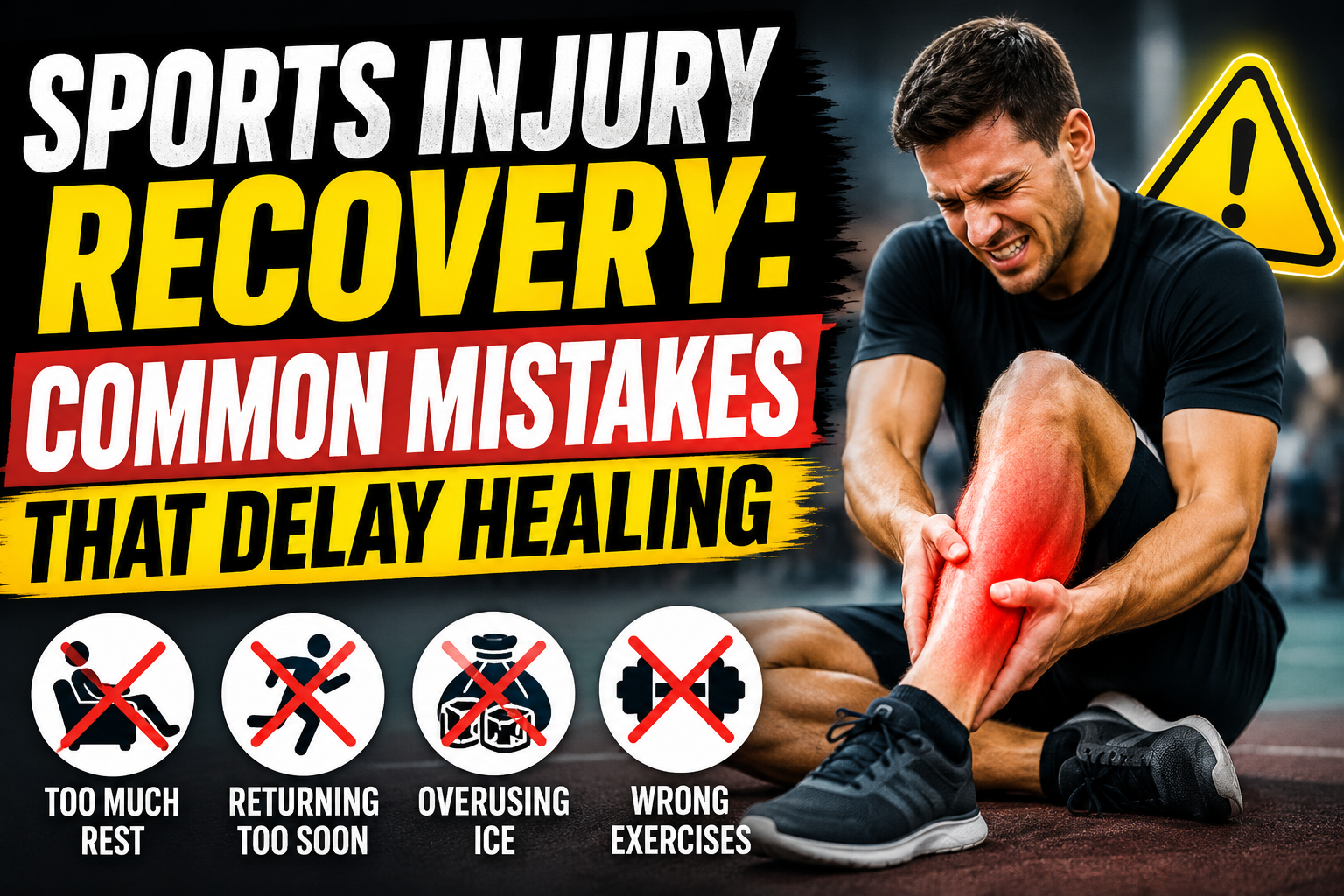
Recovering from a sports injury requires more than just rest. Whether you’re a professional athlete, fitness enthusiast, or weekend sports player, the decisions you make during recovery can significantly impact how quickly and effectively you heal.
Unfortunately, many people unknowingly make mistakes that prolong recovery, increase the risk of re-injury, and prevent a full return to activity. Understanding these common pitfalls can help you recover safely and get back to doing what you love.
Why Proper Recovery Matters
After an injury, your body begins a natural healing process involving inflammation, tissue repair, and rebuilding strength. Interrupting this process through poor recovery habits can delay healing and lead to chronic problems.
A successful recovery focuses on:
- Pain management
- Tissue healing
- Restoring mobility
- Rebuilding strength
- Preventing future injuries
1. Returning to Sports Too Soon
One of the most common mistakes athletes make is returning to activity before the injury has fully healed.
Many people stop treatment once the pain decreases, assuming they are fully recovered. However, the injured tissues may still be weak and vulnerable.
Risks:
- Re-injury
- Chronic pain
- Longer recovery periods
- Reduced athletic performance
What to Do:
Always follow your doctor’s or physiotherapist’s advice before resuming sports activities.
2. Ignoring Medical Advice
Some athletes attempt self-treatment or rely on internet advice instead of professional guidance.
Ignoring recommended rehabilitation programs can result in incomplete healing and long-term complications.
Remember:
A personalized recovery plan is often the safest path back to sports.
3. Skipping Physical Therapy
Physical therapy is not just for severe injuries.
Rehabilitation exercises help:
- Restore joint mobility
- Improve muscle strength
- Enhance balance and coordination
- Reduce the risk of future injuries
Skipping therapy often leaves the injured area weak and unstable.
4. Doing Too Much, Too Soon
While movement is important, excessive activity during recovery can worsen the injury.
Common mistakes include:
- Increasing workout intensity too quickly
- Returning to heavy lifting prematurely
- Ignoring pain signals
Follow the Rule:
Progress gradually and allow your body adequate time to adapt.
5. Not Getting Enough Rest
Healing occurs when the body rests.
Lack of sleep and inadequate recovery time can:
- Slow tissue repair
- Increase inflammation
- Reduce energy levels
- Delay overall healing
Aim For:
7–9 hours of quality sleep each night.
6. Poor Nutrition During Recovery
Your body requires nutrients to repair damaged tissues.
Important Nutrients:
- Protein for muscle repair
- Calcium for bone health
- Vitamin D for healing
- Vitamin C for collagen formation
- Omega-3 fatty acids for inflammation control
A poor diet may significantly delay recovery.
7. Ignoring Pain and Swelling
Pain and swelling are warning signals from your body.
Many athletes attempt to “push through the pain,” believing it demonstrates toughness.
In reality, persistent pain may indicate:
- Ongoing tissue damage
- Incomplete healing
- Excessive strain
Seek Medical Attention If:
- Swelling worsens
- Pain increases
- Movement becomes limited
8. Neglecting Warm-Up and Conditioning
After recovery, jumping directly back into intense activity can be dangerous.
Proper warm-up prepares muscles, tendons, and joints for movement.
Include:
- Dynamic stretching
- Light cardiovascular activity
- Sport-specific drills
9. Focusing Only on the Injured Area
Sports injuries often affect movement patterns throughout the body.
For example:
- An ankle injury can affect knee mechanics.
- A knee injury can impact hip strength.
A complete rehabilitation program should address the entire kinetic chain.
10. Failing to Prevent Future Injuries
Recovery doesn’t end when the pain disappears.
Preventive measures are essential to avoid recurrence.
Prevention Strategies:
✔ Strength training
✔ Flexibility exercises
✔ Proper footwear
✔ Good technique
✔ Regular conditioning
✔ Adequate recovery between workouts
Warning Signs That Recovery Is Not Going Well
Consult a sports medicine or orthopedic specialist if you experience:
- Persistent pain
- Recurring swelling
- Joint instability
- Limited range of motion
- Weakness during activity
- Difficulty returning to sports
Early intervention can prevent long-term complications.
Tips for Faster and Safer Recovery
Follow These Recovery Essentials:
✔ Follow your treatment plan
✔ Attend physical therapy sessions
✔ Eat a balanced diet
✔ Get adequate sleep
✔ Stay hydrated
✔ Progress activity gradually
✔ Listen to your body
✔ Avoid rushing back into sports