
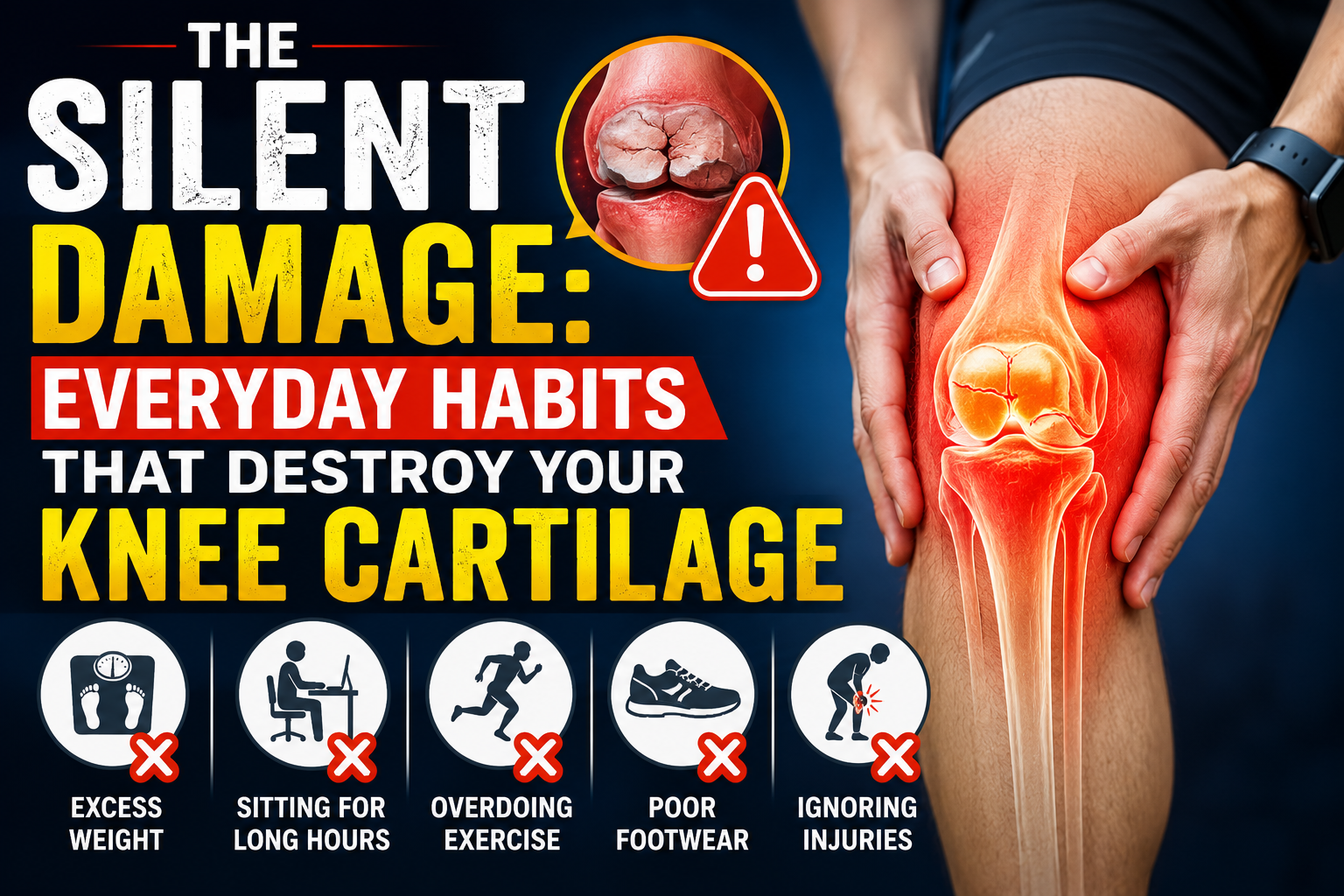
Your knees work hard every day—whether you’re walking, climbing stairs, exercising, or simply standing. At the center of this movement is knee cartilage, a smooth, rubbery tissue that cushions the bones and allows painless movement. Unfortunately, certain daily habits can gradually wear down this cartilage without causing immediate symptoms.
Over time, this silent damage can lead to knee pain, stiffness, swelling, and osteoarthritis. Understanding these harmful habits can help you protect your knees and maintain mobility for years to come.
What Is Knee Cartilage?
Cartilage is a tough yet flexible tissue that covers the ends of the bones inside the knee joint. It acts as a shock absorber, reducing friction and allowing smooth movement.
When cartilage begins to wear away, the bones may start rubbing against each other, leading to pain, inflammation, and joint damage.
1. Ignoring Excess Body Weight
One of the biggest threats to knee cartilage is carrying excess weight.
Every extra kilogram of body weight places additional stress on the knee joints. Over time, this increased pressure accelerates cartilage wear and tear.
What You Can Do:
- Maintain a healthy weight.
- Follow a balanced diet.
- Stay physically active with low-impact exercises.
2. Sitting for Long Hours
Modern lifestyles often involve prolonged sitting at desks, in cars, or on couches.
Extended sitting can:
- Weaken the muscles supporting the knee.
- Reduce joint flexibility.
- Increase stiffness and discomfort.
Prevention Tips:
- Stand up every 30–60 minutes.
- Stretch regularly.
- Take short walking breaks throughout the day.
3. Skipping Exercise
Many people avoid exercise because of knee discomfort, but inactivity can actually worsen joint health.
Weak muscles around the knee provide less support, causing more stress on the cartilage.
Best Activities:
- Walking
- Swimming
- Cycling
- Gentle strengthening exercises
4. Overdoing High-Impact Activities
While exercise is beneficial, excessive high-impact activities can strain the knees.
Examples include:
- Frequent jumping
- Running on hard surfaces
- Improper workout techniques
Repeated stress may contribute to cartilage breakdown over time.
Smart Approach:
- Use proper footwear.
- Warm up before exercise.
- Allow adequate recovery time.
5. Ignoring Knee Injuries
A minor twist, fall, or sports injury may seem harmless, but untreated knee injuries can cause long-term cartilage damage.
Common injuries include:
- ACL tears
- Meniscus injuries
- Ligament sprains
Don’t Ignore:
- Persistent swelling
- Instability
- Pain lasting more than a few days
Early treatment can prevent future joint degeneration.
6. Poor Posture and Movement Patterns
Incorrect posture places uneven pressure on the knee joint.
Examples include:
- Poor walking mechanics
- Improper lifting techniques
- Misaligned standing posture
Over time, abnormal joint loading can accelerate cartilage wear.
Improve Knee Health:
- Practice proper posture.
- Strengthen core muscles.
- Seek professional guidance if necessary.
7. Wearing Unsupportive Footwear
Your feet and knees work together.
Worn-out shoes or improper footwear can alter your walking pattern and increase stress on knee cartilage.
Choose:
✔ Supportive shoes
✔ Proper cushioning
✔ Activity-specific footwear
8. Neglecting Bone and Joint Nutrition
Cartilage and bones require essential nutrients to stay healthy.
Important nutrients include:
- Vitamin D
- Calcium
- Protein
- Omega-3 fatty acids
A poor diet may contribute to joint deterioration and slower healing.
Early Warning Signs of Cartilage Damage
Watch for:
- Knee pain during activity
- Morning stiffness
- Swelling around the knee
- Clicking or grinding sensations
- Difficulty climbing stairs
- Reduced range of motion
If these symptoms persist, consult an orthopedic specialist.
How to Protect Your Knee Cartilage
Follow These Simple Steps:
✔ Maintain a healthy weight
✔ Exercise regularly
✔ Strengthen thigh and leg muscles
✔ Avoid prolonged sitting
✔ Wear proper footwear
✔ Treat injuries promptly
✔ Eat a nutrient-rich diet
✔ Schedule orthopedic evaluations when needed