
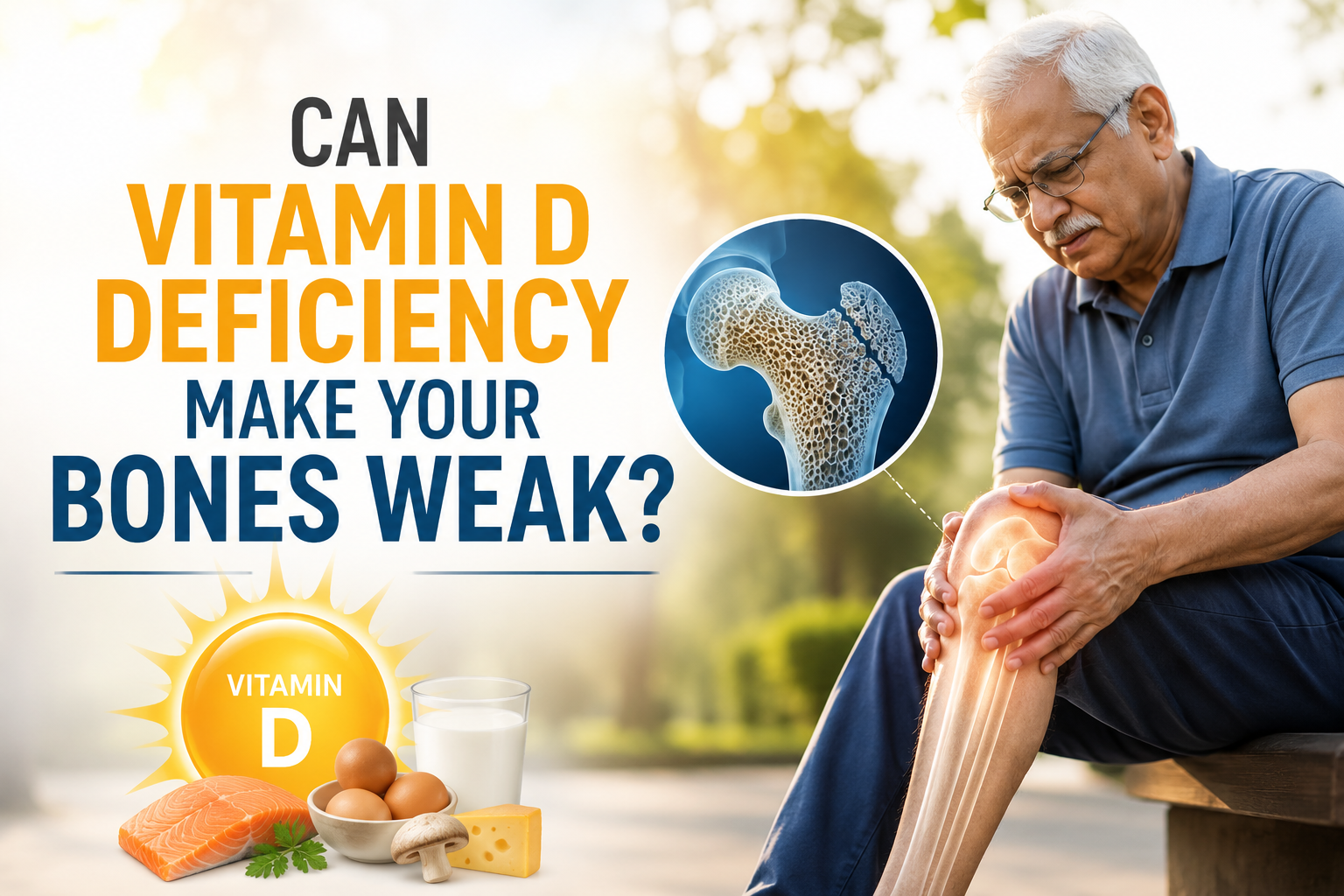
Vitamin D is a fat-soluble vitamin that helps the body absorb calcium and phosphorus, two minerals that are essential for building and maintaining strong bones.
Our bodies produce Vitamin D when the skin is exposed to sunlight. It can also be obtained from certain foods and dietary supplements.
How Does Vitamin D Affect Bone Health?
Vitamin D helps the body absorb calcium from food. Without enough Vitamin D, the body cannot absorb sufficient calcium, even if your diet contains enough of it.
When calcium levels become too low, the body starts taking calcium from the bones to maintain normal blood calcium levels. Over time, this process weakens the bones and increases the risk of bone-related problems.
Signs and Symptoms of Vitamin D Deficiency
Common symptoms include:
- Bone pain
- Muscle weakness
- Fatigue and tiredness
- Back pain
- Joint pain
- Frequent falls
- Muscle cramps
- Slow healing after fractures
Some people may not experience any symptoms until the deficiency becomes severe.
Who Is at Risk?
Certain factors can increase the risk of Vitamin D deficiency, including:
- Limited exposure to sunlight
- Aging
- Poor dietary habits
- Obesity
- Chronic kidney disease
- Digestive disorders
- A sedentary lifestyle
- Wearing clothing that limits sun exposure
Bone Problems Caused by Vitamin D Deficiency
Osteoporosis
Low Vitamin D levels can contribute to osteoporosis, a condition that makes bones weak and brittle.
Osteomalacia
In adults, severe Vitamin D deficiency can cause osteomalacia, a condition that softens the bones and causes pain and muscle weakness.
Increased Risk of Fractures
Weak bones are more likely to break, even after minor falls or injuries.
Foods Rich in Vitamin D
You can improve your Vitamin D levels by including these foods in your diet:
- Fatty fish such as salmon and tuna
- Egg yolks
- Cheese
- Fortified milk
- Yogurt
- Mushrooms
- Fortified cereals
How Much Sunlight Do You Need?
Regular exposure to sunlight can help the body produce Vitamin D naturally. Spending 15-30 minutes in the morning sunlight several days a week may be beneficial.
However, the amount of sunlight required varies depending on age, skin type, location, and lifestyle.
When Should You See a Doctor?
Consult a doctor if you experience:
- Persistent bone pain
- Frequent fractures
- Muscle weakness
- Difficulty walking
- Unexplained fatigue
A simple blood test can determine whether you have a Vitamin D deficiency.