
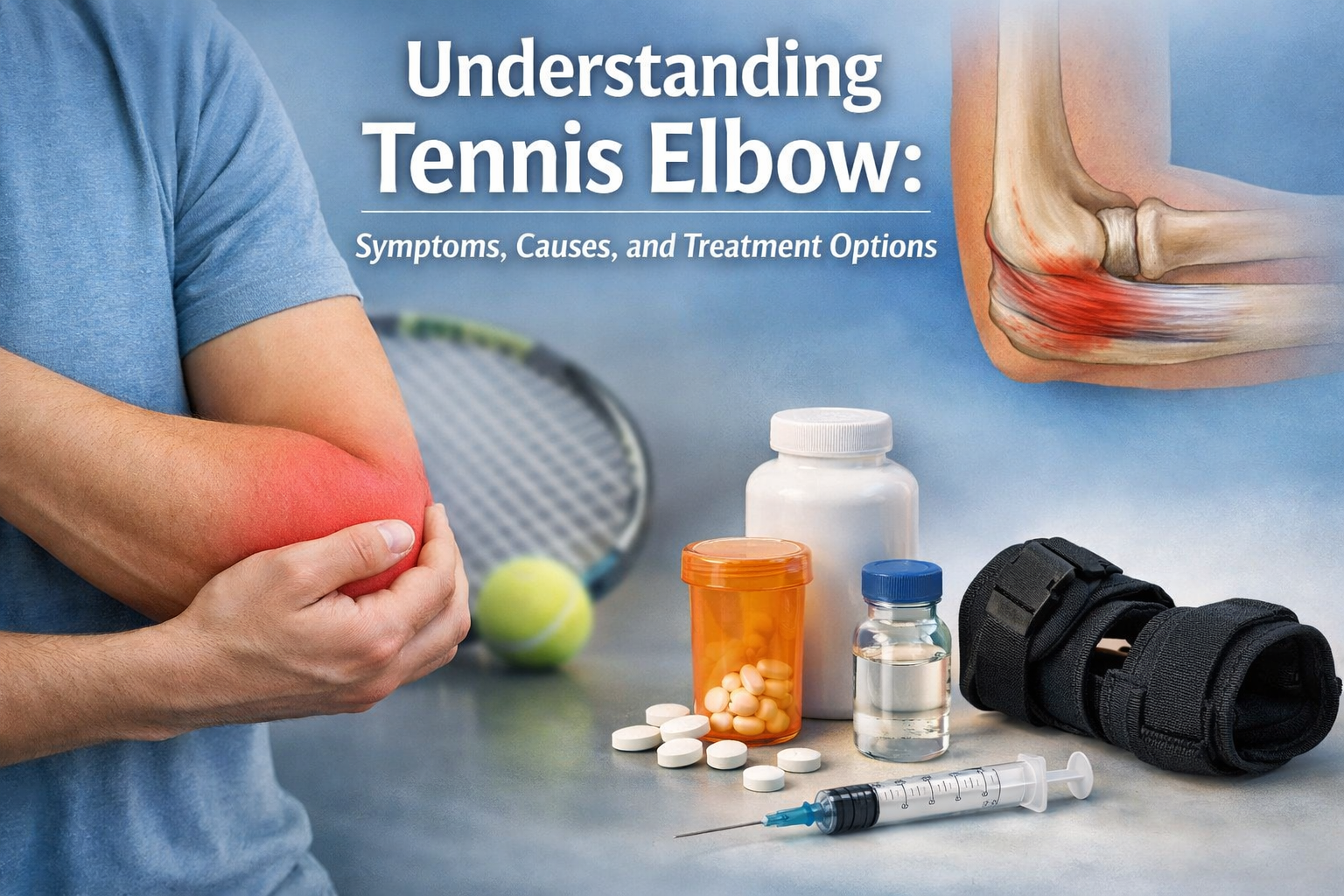
What is Tennis Elbow?
Tennis Elbow is a common condition that causes pain around the outer part of the elbow due to overuse of the forearm muscles and tendons. Despite the name, it does not affect only tennis players. Anyone who repeatedly uses their wrist and arm for activities such as typing, lifting, carpentry, or gardening can develop this problem.
This condition occurs when the tendons that connect the forearm muscles to the elbow become inflamed or develop tiny tears. Over time, repetitive strain can worsen the damage and lead to persistent discomfort. Early diagnosis and proper care are important to prevent long-term complications and restore arm function.
Common Symptoms of Tennis Elbow
Recognizing the signs early helps in effective recovery. The most noticeable symptom is pain on the outer side of the elbow that may gradually worsen with activity.
Key symptoms include:
- Pain or burning sensation on the outer elbow
- Weak grip strength while holding objects
- Difficulty lifting items such as cups or tools
- Pain while twisting the wrist or forearm
- Stiffness in the elbow during morning hours
In many cases, the discomfort may spread down the forearm toward the wrist, making everyday activities challenging.
Causes and Risk Factors
Tennis elbow is primarily caused by repetitive movements that strain the forearm tendons. Continuous stress on these tissues can lead to micro-tears and inflammation.
Common causes include:
- Repeated wrist extension and gripping movements
- Improper sports technique in racquet sports
- Heavy use of hand tools or equipment
- Prolonged computer or mouse usage
- Occupational strain in painters, plumbers, and mechanics
Certain risk factors such as poor ergonomics, inadequate muscle strength, and aging can also increase the likelihood of developing this condition.
Diagnosis and Medical Evaluation
Doctors usually diagnose tennis elbow through physical examination and discussion of symptoms. The physician may check for tenderness around the lateral epicondyle and evaluate grip strength or pain during specific arm movements.
In some cases, imaging tests such as ultrasound or MRI may be recommended to confirm tendon damage and rule out other elbow disorders. Early medical consultation helps prevent worsening of the injury.
Effective Treatment Options
Treatment focuses on reducing pain, promoting tendon healing, and restoring normal arm function.
Non-surgical treatments include:
- Rest and activity modification
- Ice therapy to reduce inflammation
- Physiotherapy exercises for forearm strength
- Use of elbow braces or supports
- Anti-inflammatory medications
Advanced treatment options:
- Platelet-rich plasma injections
- Shockwave therapy
- Minimally invasive surgical procedures (for severe cases)
If symptoms persist for several months, a specialist may recommend advanced therapies to repair damaged tendons and improve mobility.
Prevention Tips for Healthy Elbows
Preventing tennis elbow involves reducing repetitive strain and strengthening the forearm muscles.
Helpful prevention strategies:
- Warm up before sports or physical work
- Maintain proper posture and ergonomics
- Use correct equipment and technique
- Take frequent breaks during repetitive tasks
- Perform stretching and strengthening exercises regularly
These measures can significantly lower the risk of tendon injury and keep the elbow joint healthy.
Expert Care for Elbow Pain
If you experience persistent elbow discomfort, it is important to seek professional medical guidance. Consult our Best Orthopedic Hospital in Hyderabad – Regain Bone & Joint Care for expert diagnosis and advanced treatment options from experienced orthopedic specialists.
Conclusion
Tennis elbow is a painful but treatable condition caused mainly by repetitive strain on the forearm tendons. Recognizing symptoms early and seeking timely treatment can prevent long-term damage.
With proper rest, physiotherapy, and medical guidance, most patients recover fully and return to normal activities without pain.
Early care protects joint health and restores arm strength quickly.