
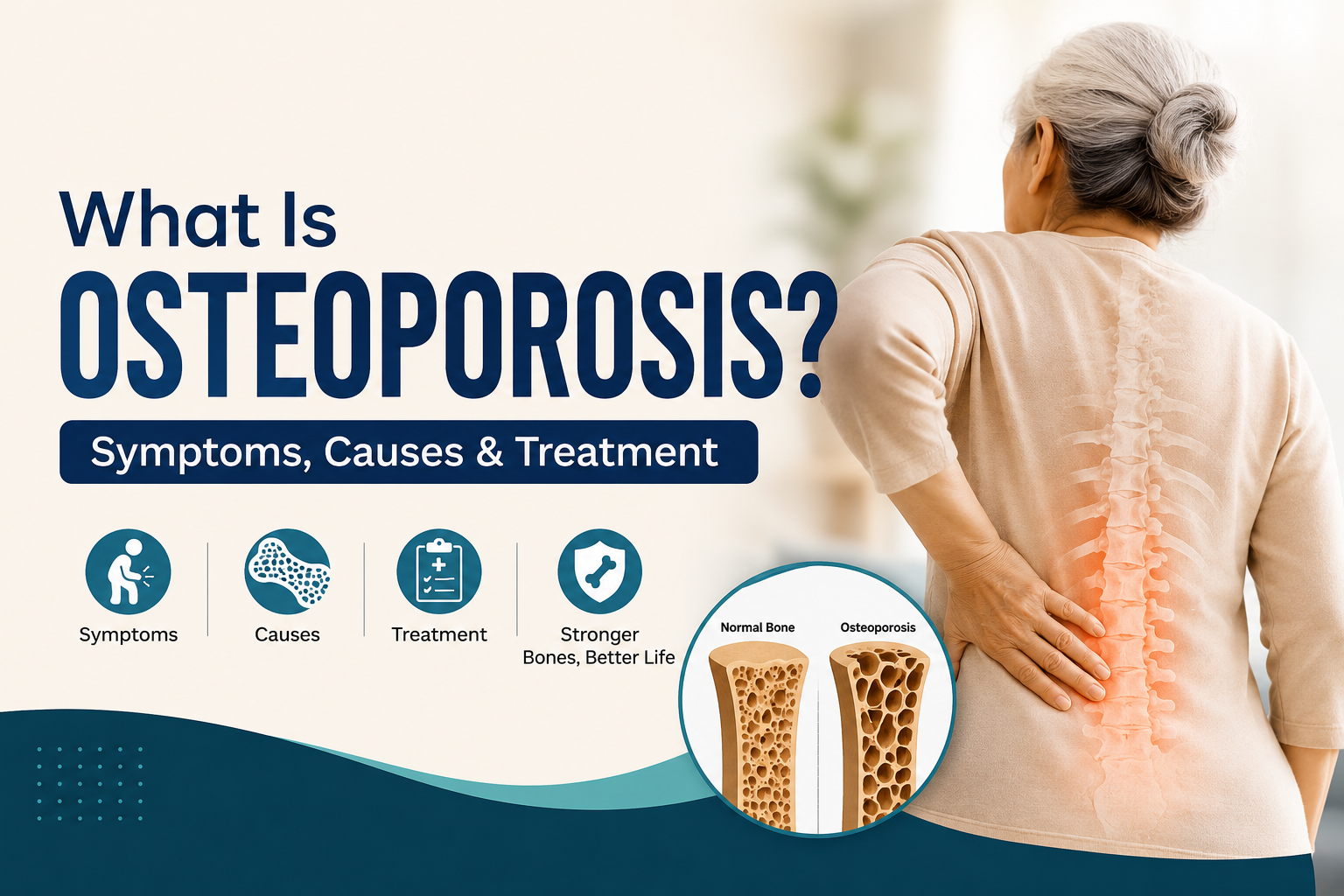
What Is Osteoporosis? Symptoms, Causes & Treatment
What Is Osteoporosis?
Osteoporosis is a common bone disease that causes bones to become weak, brittle, and more likely to break. It develops when the body loses too much bone, makes too little new bone, or both. Because bone loss occurs gradually and often without noticeable symptoms, osteoporosis is often called the “silent disease.” Many people don’t realize they have it until they suffer a fracture from a minor fall, a sudden twist, or even a simple daily activity.
Healthy bones are constantly being renewed. As we age, especially after the age of 50, bone loss can occur faster than the body can replace it. This imbalance reduces bone density and weakens the internal structure of bones, increasing the risk of fractures.
Why Is Osteoporosis a Serious Health Concern?
Osteoporosis affects millions of people worldwide and is one of the leading causes of disability among older adults. Fragile bones can significantly impact mobility, independence, and overall quality of life.
The most commonly affected bones include:
- Hip
- Spine (vertebrae)
- Wrist
- Shoulder
- Pelvis
A hip fracture, in particular, can require surgery, prolonged rehabilitation, and may reduce a person’s ability to live independently.
Symptoms of Osteoporosis
In its early stages, osteoporosis usually causes no symptoms. As bone loss progresses, you may notice:
- Frequent bone fractures after minor injuries
- Persistent back pain
- Loss of height over time
- Stooped or hunched posture
- Weak grip strength
- Difficulty standing or walking for long periods
- Bones that break more easily than expected
Warning Signs That Need Immediate Medical Attention
Seek medical evaluation if you experience:
- A fracture after a minor fall
- Sudden severe back pain
- Noticeable loss of height
- A bent or stooped posture
- Repeated fractures without significant trauma
Causes of Osteoporosis
Several factors can contribute to osteoporosis.
Age
Bone density naturally decreases with age, especially after 50 years.
Hormonal Changes
Women are at greater risk after menopause because estrogen levels drop rapidly, accelerating bone loss.
Calcium and Vitamin D Deficiency
Bones require calcium for strength and vitamin D for calcium absorption. Deficiency in either nutrient weakens bones.
Physical Inactivity
A sedentary lifestyle leads to weaker bones and muscles.
Smoking and Alcohol
Smoking and excessive alcohol consumption interfere with bone formation and increase fracture risk.
Long-Term Medication Use
Certain medications, particularly long-term corticosteroids, can reduce bone density.
Medical Conditions
Some chronic diseases affecting hormone balance, digestion, kidneys, or thyroid function may increase the risk of osteoporosis.
Risk Factors
You may be at higher risk if you:
- Are over 50 years of age
- Are female, especially after menopause
- Have a low body weight
- Have a family history of osteoporosis
- Smoke regularly
- Consume excessive alcohol
- Have low calcium or vitamin D intake
- Lead a physically inactive lifestyle
- Take long-term steroid medications
- Have previously experienced a low-impact fracture
How Is Osteoporosis Diagnosed?
Early diagnosis helps prevent fractures and long-term complications.
Bone Mineral Density (DEXA Scan)
A DEXA scan is the most accurate and commonly used test to measure bone density. It is painless, quick, and helps determine your fracture risk.
Additional evaluations may include:
- Medical history review
- Physical examination
- Blood tests
- Vitamin D and calcium level assessment
- X-rays (when fractures are suspected)
Treatment for Osteoporosis
The goal of treatment is to strengthen bones, reduce fracture risk, and improve quality of life.
1. Medications
Depending on the severity of osteoporosis, your orthopedic specialist may prescribe medications that:
- Slow bone loss
- Improve bone strength
- Reduce the risk of fractures
Treatment plans are individualized based on age, bone density, medical history, and fracture risk.
2. Calcium and Vitamin D
Adequate calcium and vitamin D intake is essential for maintaining healthy bones.
Good dietary sources include:
- Milk
- Yogurt
- Cheese
- Leafy green vegetables
- Almonds
- Fish
- Fortified foods
Your doctor may recommend supplements if dietary intake is insufficient.
3. Regular Exercise
Weight-bearing and muscle-strengthening exercises help maintain bone density.
Recommended activities include:
- Walking
- Stair climbing
- Strength training
- Resistance band exercises
- Tai Chi
- Balance exercises
Exercise also improves coordination, reducing the risk of falls.
4. Lifestyle Changes
Simple lifestyle modifications can significantly improve bone health.
- Quit smoking
- Limit alcohol intake
- Maintain a healthy body weight
- Eat a balanced diet
- Stay physically active
- Get adequate sunlight exposure for vitamin D production
5. Fall Prevention
Preventing falls is one of the best ways to reduce fracture risk.
Helpful measures include:
- Wearing supportive footwear
- Removing loose rugs and clutter
- Installing handrails in bathrooms and stairways
- Ensuring adequate lighting at home
- Having regular vision and hearing check-ups
Can Osteoporosis Be Prevented?
Yes. Although aging cannot be stopped, many cases of osteoporosis can be delayed or prevented through healthy lifestyle habits.
Prevention Tips
- Consume enough calcium every day.
- Maintain healthy vitamin D levels.
- Exercise regularly.
- Avoid smoking.
- Limit alcohol.
- Maintain a healthy weight.
- Schedule bone density screening if you’re at increased risk.